We use cookies to ensure our site functions properly and to store limited information about your usage. You may give or withdraw consent at any time. To find out more, read our privacy policy and cookie policy.
Manage Cookies
A cookie is information stored on your computer by a website you visit. Cookies often store your settings for a website, such as your preferred language or location. This allows the site to present you with information customized to fit your needs. As per the GDPR law, companies need to get your explicit approval to collect your data. Some of these cookies are ‘strictly necessary’ to provide the basic functions of the website and can not be turned off, while others if present, have the option of being turned off. Learn more about our Privacy and Cookie policies. These can be managed also from our cookie policy page.
Strictly necessary cookies(always on):
Necessary for enabling core functionality. The website cannot function properly without these cookies. This cannot be turned off. e.g. Sign in, Language
Analytics cookies:
Analytical cookies help us to analyse user behaviour, mainly to see if the users are able to find and act on things that they are looking for. They allow us to recognise and count the number of visitors and to see how visitors move around our website when they are using it. Tools used: Google Analytics
No analytics cookies have been enabled on this site. There are no cookies to review.
The Jurassic Coast Stakeholder Participation Survey
Share The Jurassic Coast Stakeholder Participation Survey on FacebookShare The Jurassic Coast Stakeholder Participation Survey on X (formerly Twitter)Share The Jurassic Coast Stakeholder Participation Survey on LinkedinEmail The Jurassic Coast Stakeholder Participation Survey link
This survey is an opportunity to capture a wide range of perspectives — from those who work with the Jurassic Coast every day to those who value it in different ways. By bringing these views together, we can better understand how people connect to the Jurassic Coast and how we can work more effectively together in the future.
Your input will directly inform the next Jurassic Coast World Heritage Site Management Plan, helping to shape priorities, strengthen collaboration, and guide how the Site is cared for in the years ahead.
What is “Outstanding Universal Value”?
As you complete this survey, you will see reference to “Outstanding Universal Value” (OUV). This is the term used to describe what makes a World Heritage Site important at a global level, and that should be protected for current and future generations.
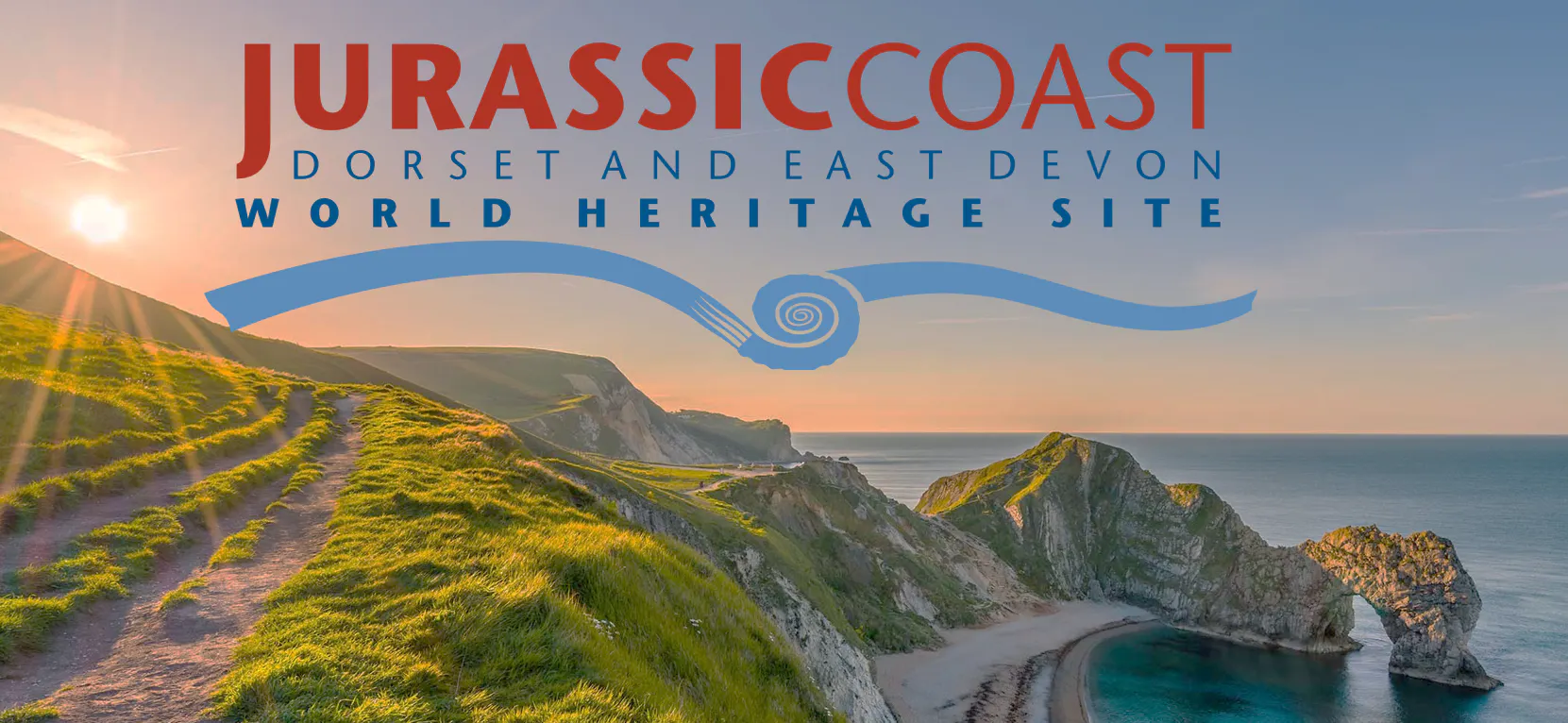
For the Jurassic Coast, this value lies in the way its cliffs and beaches reveal an almost continuous record of around 185 million years of Earth’s history. The sequence of rocks provides a timeline through the Triassic, Jurassic and Cretaceous periods, supported by an exceptional fossil record that captures the evolution of life and past environments. This is combined with a wide range of coastal landforms — from bays and headlands to caves, arches and landslides — which are shaped by natural processes that are still active today.
Together, these features make the coastline not only a record of the past, but a dynamic and evolving landscape, where new discoveries continue to be made. This combination of completeness, visibility and ongoing change is what makes the Jurassic Coast one of the most important places in the world for understanding how our planet has developed, and why it is recognised and protected as a World Heritage Site.
How we will use your responses
Your responses will contribute to a stakeholder mapping exercise, helping us build a clearer picture of the network of people and organisations connected to the Jurassic Coast. This includes understanding where strong relationships already exist, and where there may be opportunities to strengthen collaboration. The findings will feed directly into the next Management Plan, ensuring it reflects the knowledge, experience and priorities of those connected to the Site.
Your information
This survey is not anonymous, as understanding the network of people involved is an important part of the process. We ask for your contact details so we can share updates and outcomes from this work. Your personal information will not be shared with third parties. When we report findings, responses will be presented in summary form, and individuals will not be identified without permission.
This survey closed on the 23 August 2026. Thank you for taking the time to contribute ,your perspective is an important part of understanding and supporting the future of the Jurassic Coast.
This survey is an opportunity to capture a wide range of perspectives — from those who work with the Jurassic Coast every day to those who value it in different ways. By bringing these views together, we can better understand how people connect to the Jurassic Coast and how we can work more effectively together in the future.
Your input will directly inform the next Jurassic Coast World Heritage Site Management Plan, helping to shape priorities, strengthen collaboration, and guide how the Site is cared for in the years ahead.
What is “Outstanding Universal Value”?
As you complete this survey, you will see reference to “Outstanding Universal Value” (OUV). This is the term used to describe what makes a World Heritage Site important at a global level, and that should be protected for current and future generations.
For the Jurassic Coast, this value lies in the way its cliffs and beaches reveal an almost continuous record of around 185 million years of Earth’s history. The sequence of rocks provides a timeline through the Triassic, Jurassic and Cretaceous periods, supported by an exceptional fossil record that captures the evolution of life and past environments. This is combined with a wide range of coastal landforms — from bays and headlands to caves, arches and landslides — which are shaped by natural processes that are still active today.
Together, these features make the coastline not only a record of the past, but a dynamic and evolving landscape, where new discoveries continue to be made. This combination of completeness, visibility and ongoing change is what makes the Jurassic Coast one of the most important places in the world for understanding how our planet has developed, and why it is recognised and protected as a World Heritage Site.
How we will use your responses
Your responses will contribute to a stakeholder mapping exercise, helping us build a clearer picture of the network of people and organisations connected to the Jurassic Coast. This includes understanding where strong relationships already exist, and where there may be opportunities to strengthen collaboration. The findings will feed directly into the next Management Plan, ensuring it reflects the knowledge, experience and priorities of those connected to the Site.
Your information
This survey is not anonymous, as understanding the network of people involved is an important part of the process. We ask for your contact details so we can share updates and outcomes from this work. Your personal information will not be shared with third parties. When we report findings, responses will be presented in summary form, and individuals will not be identified without permission.
This survey closed on the 23 August 2026. Thank you for taking the time to contribute ,your perspective is an important part of understanding and supporting the future of the Jurassic Coast.
This survey is divided into four short sections. It begins with questions about you and your connection to the Jurassic Coast, followed by your understanding and views of the World Heritage Site. It then explores your role in supporting and influencing the Site, and finally looks at how stakeholders currently work together and where there may be opportunities to strengthen collaboration.
This survey will close on 23 August 2026.
Thank you for taking the time to contribute!
Share The Jurassic Coast Stakeholder Participation Survey on FacebookShare The Jurassic Coast Stakeholder Participation Survey on X (formerly Twitter)Share The Jurassic Coast Stakeholder Participation Survey on LinkedinEmail The Jurassic Coast Stakeholder Participation Survey link