We use cookies to ensure our site functions properly and to store limited information about your usage. You may give or withdraw consent at any time. To find out more, read our privacy policy and cookie policy.
Manage Cookies
A cookie is information stored on your computer by a website you visit. Cookies often store your settings for a website, such as your preferred language or location. This allows the site to present you with information customized to fit your needs. As per the GDPR law, companies need to get your explicit approval to collect your data. Some of these cookies are ‘strictly necessary’ to provide the basic functions of the website and can not be turned off, while others if present, have the option of being turned off. Learn more about our Privacy and Cookie policies. These can be managed also from our cookie policy page.
Strictly necessary cookies(always on):
Necessary for enabling core functionality. The website cannot function properly without these cookies. This cannot be turned off. e.g. Sign in, Language
Analytics cookies:
Analytical cookies help us to analyse user behaviour, mainly to see if the users are able to find and act on things that they are looking for. They allow us to recognise and count the number of visitors and to see how visitors move around our website when they are using it. Tools used: Google Analytics
No analytics cookies have been enabled on this site. There are no cookies to review.
Jurassic Coast World Heritage – Help Shape the New Website
Share Jurassic Coast World Heritage – Help Shape the New Website on FacebookShare Jurassic Coast World Heritage – Help Shape the New Website on X (formerly Twitter)Share Jurassic Coast World Heritage – Help Shape the New Website on LinkedinEmail Jurassic Coast World Heritage – Help Shape the New Website link
Consultation has concluded
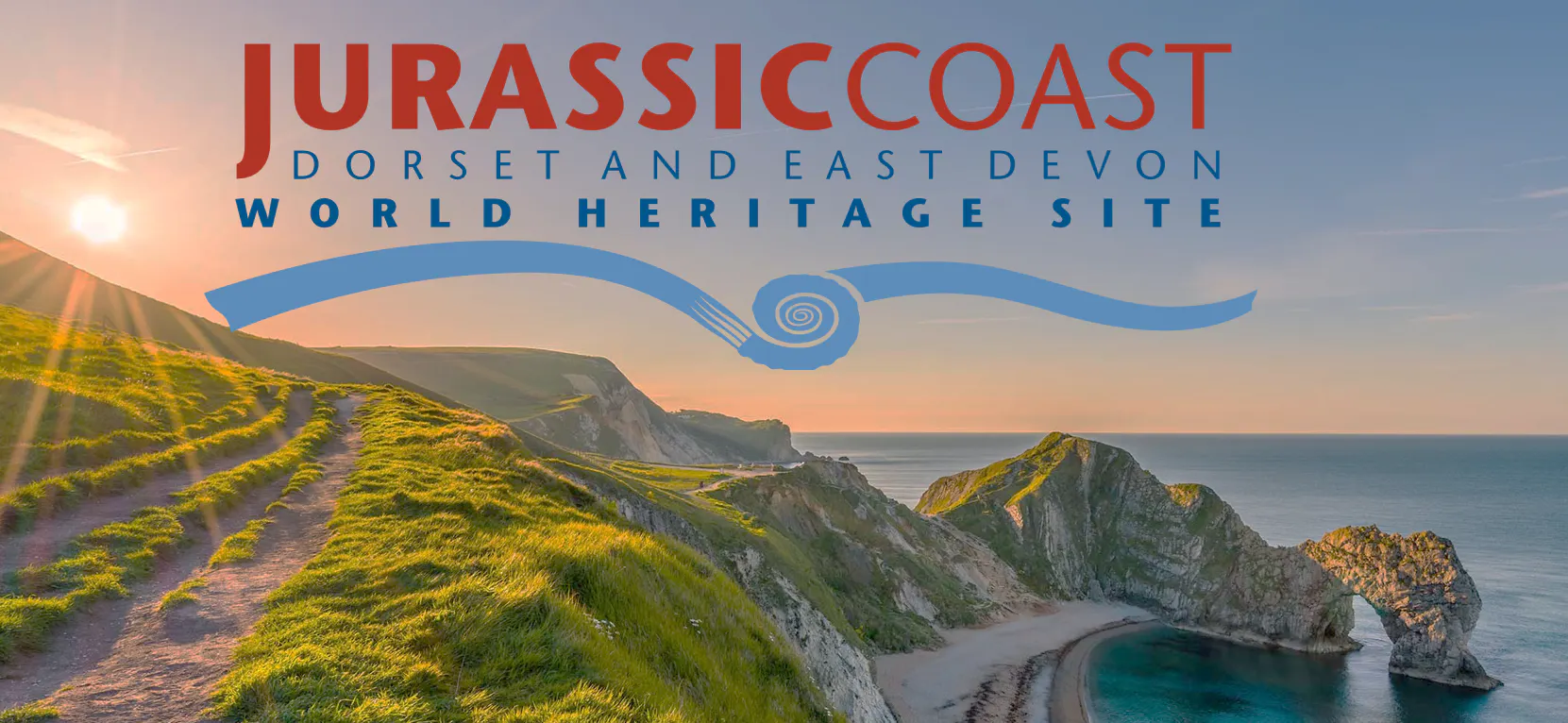
The Jurassic Coast is the Dorset and East Devon coastline between Orcombe Point (near Exmouth) and Studland Bay (near Poole). It was inscribed as a UNESCO World Heritage Site in 2001 under criterion viii (Earth’s history) because of the global scientific importance of its geology, fossils and coastal landforms.
Along approximately 155 km (95 miles) of largely undeveloped cliffs and beaches, the rocks expose an almost continuous record of around 185 million years of Earth’s history, including internationally important fossil localities and classic examples of coastal geomorphological features and processes.
The Site’s Outstanding Universal Value (OUV) lies in this exceptional geological record and the way it is maintained by ongoing natural processes, particularly erosion. Protecting OUV means allowing these natural processes to continue, while managing access, safety and use responsibly through partnership working.
What we are doing
We are building a new official Jurassic Coast World Heritage Site website to explain the Site’s Outstanding Universal Value (OUV), support safe and responsible visiting, and provide a hub for the partnership.
Your input will help shape the new official website for the Jurassic Coast World Heritage Site partnership, planned to launch in December 2026.
What the website is (and isn’t)
The website will be the official place for the Site’s Outstanding Universal Value (OUV), safe and responsible visiting (including coastal change, tides, cliffs and landslides), fossil collecting guidance, and a practical hub for the partnership.
It is not a tourism sales/booking site or a commercial directory.
What we’re asking for
This survey helps us:
confirm what the website should do especially well (priorities and audiences)
apply a consistent approach to signposting and external links (partners/public bodies and official destination websites)
gather details (optional) for organisations who wish to be included on the Jurassic Coast Trail / interactive map
identify potential sources of high-quality photography and drone footage (optional)
Deadline
Please complete the survey by 22/05/2026
The Jurassic Coast is the Dorset and East Devon coastline between Orcombe Point (near Exmouth) and Studland Bay (near Poole). It was inscribed as a UNESCO World Heritage Site in 2001 under criterion viii (Earth’s history) because of the global scientific importance of its geology, fossils and coastal landforms.
Along approximately 155 km (95 miles) of largely undeveloped cliffs and beaches, the rocks expose an almost continuous record of around 185 million years of Earth’s history, including internationally important fossil localities and classic examples of coastal geomorphological features and processes.
The Site’s Outstanding Universal Value (OUV) lies in this exceptional geological record and the way it is maintained by ongoing natural processes, particularly erosion. Protecting OUV means allowing these natural processes to continue, while managing access, safety and use responsibly through partnership working.
What we are doing
We are building a new official Jurassic Coast World Heritage Site website to explain the Site’s Outstanding Universal Value (OUV), support safe and responsible visiting, and provide a hub for the partnership.
Your input will help shape the new official website for the Jurassic Coast World Heritage Site partnership, planned to launch in December 2026.
What the website is (and isn’t)
The website will be the official place for the Site’s Outstanding Universal Value (OUV), safe and responsible visiting (including coastal change, tides, cliffs and landslides), fossil collecting guidance, and a practical hub for the partnership.
It is not a tourism sales/booking site or a commercial directory.
What we’re asking for
This survey helps us:
confirm what the website should do especially well (priorities and audiences)
apply a consistent approach to signposting and external links (partners/public bodies and official destination websites)
gather details (optional) for organisations who wish to be included on the Jurassic Coast Trail / interactive map
identify potential sources of high-quality photography and drone footage (optional)
About you - a few details about you and your organisation.
Website scope & priorities - quick tick‑box questions to confirm what the new site should focus on most and do especially well (priorities and audiences).
Signposting - what types of links the website should include (partners/public bodies and official destination websites), and whether you’d like your organisation signposted.
Jurassic Coast Trail / interactive map - If you want to be included as a map point / trail partner, you can provide listing details; if not, you can skip this section.
Photography & drone footage - optional. You can upload images/footage that you would like us to use, simply tell us what might be available, or suggest places where imagery of the World Heritage Site could be sourced.
Consultation has concluded
Share Jurassic Coast Website – Survey for stakeholders on FacebookShare Jurassic Coast Website – Survey for stakeholders on X (formerly Twitter)Share Jurassic Coast Website – Survey for stakeholders on LinkedinEmail Jurassic Coast Website – Survey for stakeholders link