Key Information
- Hummocky areas where surface distress was identified in grassed areas and footways;
- Tension cracking forming in oversteep vegetated slopes;
- Footway and stairway distress in the form of tension cracking, structural cracking, pavement settlement and heave;
- Dilapidated surface drainage and retaining wall weepholes, blocked or semi-blocked by debris and siltation.
- Removal of a tarmac pathway approximately 30m in length
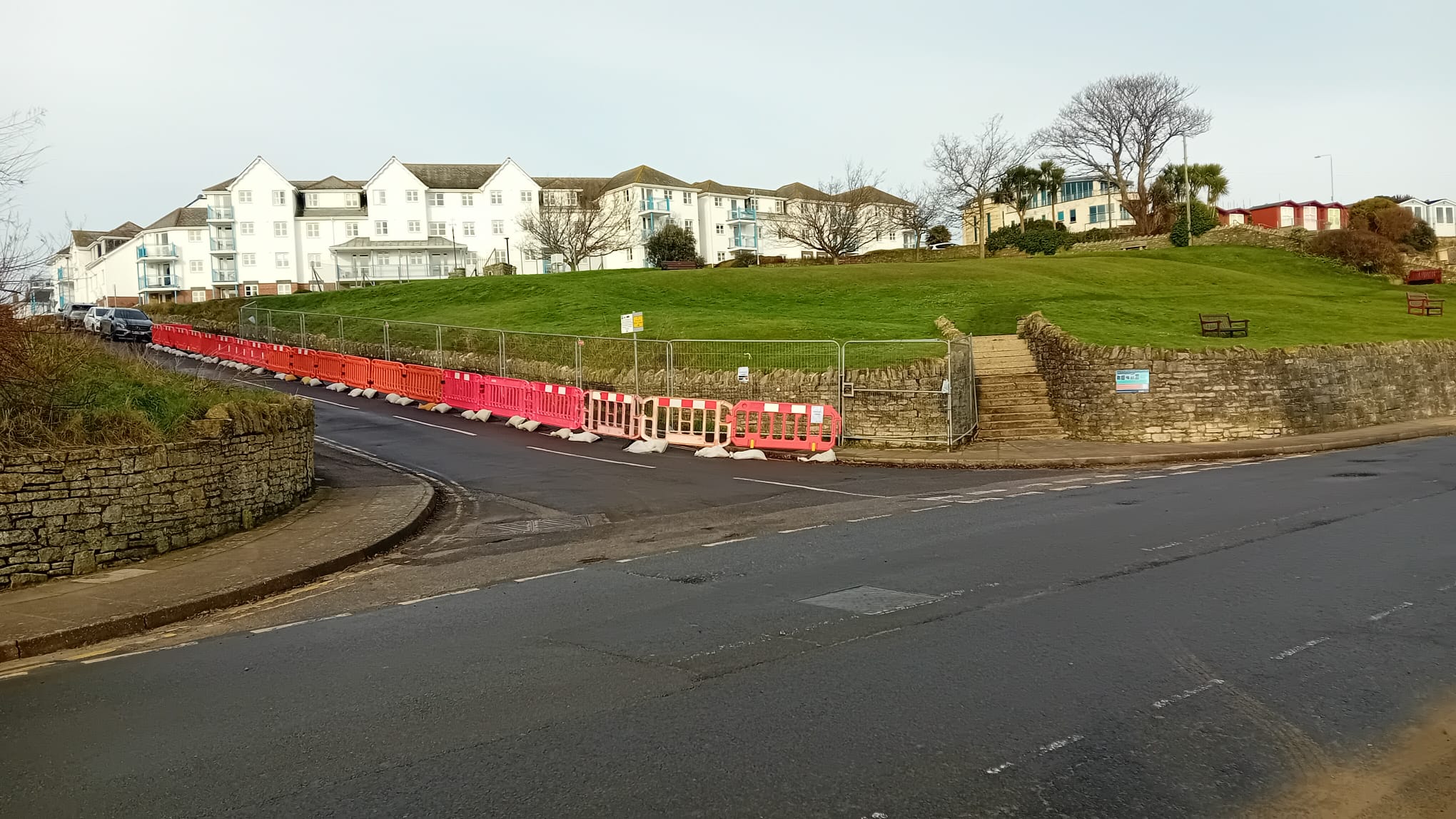
- Installation of heras fencing on a retaining stone wall showing stress and cracking;
- Installation of an exclusion zone of circa 25m in length along a section of stone wall as a result of lateral movement.
- Resurfacing of a tarmac pathway due to deterioration due to ground movement
- Removal of benches and installation of ‘barriers’ created from railway sleepers to prevent access to specific risk locations,
- Installation of safety signage warning of uneven and shearing ground;
- Reinstatement/replacement of stone blocks due to overturning as a result of ground movement.
- ‘Fencing off’ specific locations to prevent public access as a result of unstable walls and other landscape features.
- £1.7m Capital Receipts Reserve
- £1.7m Earmarked Reserves
- £0.25m Community Infrastructure Levy (CIL)
- External grant and funding opportunities may arise at any time. To make successful applications the Council needs to know what is important to the community and the level of support for each stabilisation option. Understanding the amount of funding required for residents’ preferred option is also very important in any grant applications.
- To inform the Town Council’s evaluation of funding options, including borrowing and asset disposals.
- Regrading of existing slopes
- Soil nailing to stabilise slopes and walls
- Repair of existing retaining walls
- Construction of new retaining walls
Why are these works required?
Why are these works required?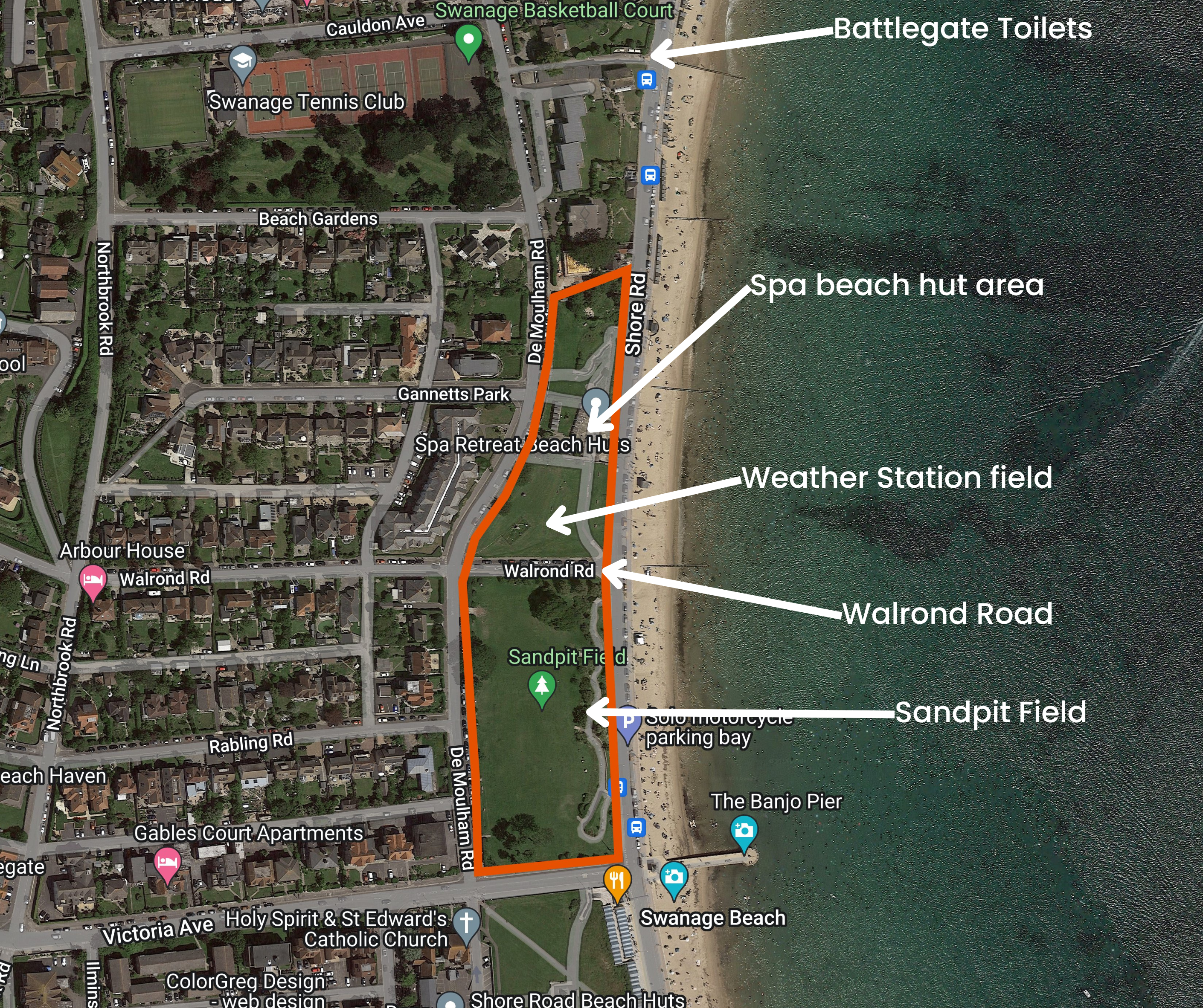
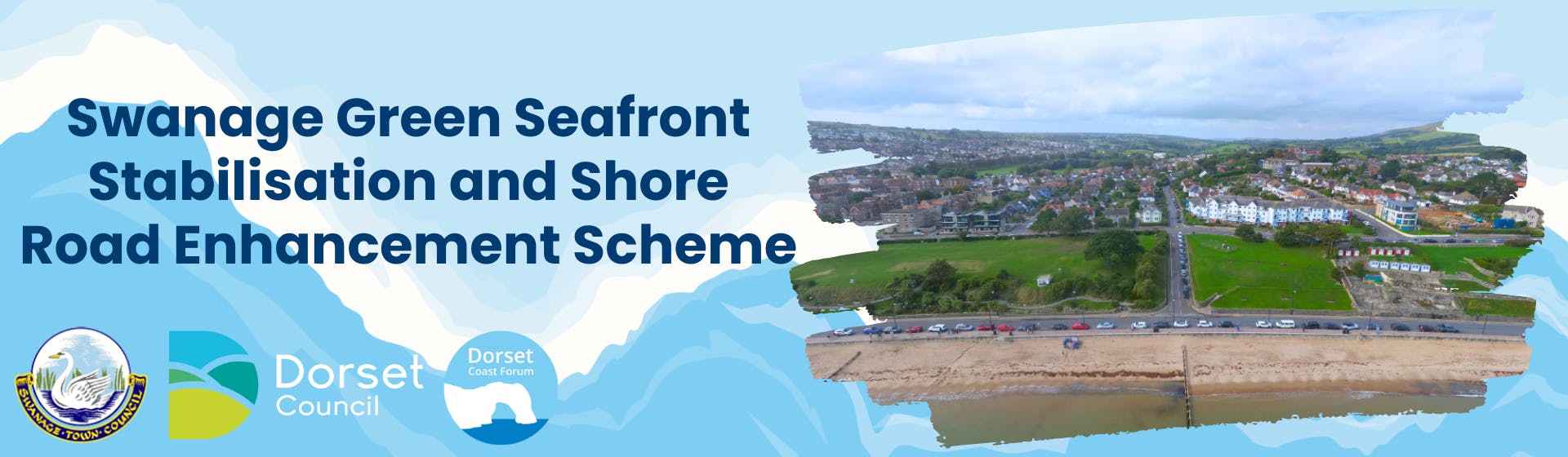
Due to significant ground movement and slope instability, the Green Seafront comprising Sandpit Field, Weather Station Field, and the ‘Spa’ beach hut area requires essential work to stabilise the land.
Ground movement in this location has been evident for a number of years with extensive ground stabilisation works being completed by the Council at the Recreation Ground in 2013/14.
Following this, and further to receipt of a number of geotechnical reports and advice, in 2020 the Council commenced active monitoring of the extent and nature of this ground movement on the Green Seafront. This was achieved through the insertion of a number of bore holes many metres deep to enable monthly monitoring of inclinometer and ground water levels to establish precisely the nature and extent of the ground movement. Monitoring results from 2020 to date have demonstrated substantial ground movement across the Green Seafront. This is in addition to defects to structures above ground such as stone walls and pathways that are visibly showing signs of stress and movement.
In 2022 the Council engaged professional geotechnical advice to provide a Ground Stabilisation Feasibility study to assess the potential geotechnical solutions available to stabilise the ground. These remedial options set out a range of interventions that could be used, more likely in tandem, and included soil nails/anchorages, full reconstruction of existing walls as gravity walls or embedded retaining walls, slope regarding and granular replacement.
In 2023 the Council engaged further professional advice to identify defects across the Green Seafront and develop a risk register to enable determination of the rate of deterioration of assets in these locations. These defects include:
Retaining walls with vertical and/or horizontal cracking, bulging or bowing, partial failure in bearing/overturning etc.;
Regular risk inspections have been completed since that time most recently in February 2025 and the Council is now monitoring 46 defects. As a result of these and other risk inspections many interventions have been made by the Council which include:
Professional advice has indicated that over time there will be an increasing risk of significant and sudden ground movement. To give precise timescales or calculate the risk of this occurring at any given moment is not possible as this depends on a wide range of factors. What is evident however are the negative impacts of the ground movement that can be seen now, and which will continue and increase in their impact upon the use of these spaces. These negative impacts therefore also include increasing risks of increased dereliction and costs associated with temporary/emergency works.
Finance and Funding - 2025
Green Seafront
Additional cost analysis of the essential scheme has been undertaken and this has resulted in an estimated cost of £4.5m. The new scheme has also been subject to cost analysis and has an estimated cost of £6.5m. Both cost estimates are based on works commencing in Autumn 2026 (this timing is subject to change).
The Council currently has £3.65m set aside to fund the works:
It is estimated that a further £0.2m may be available from gains made on the disposal of investments. This leaves a potential shortfall in funding between £0.65m and £2.65m. The Council has actively sought sources of external funding towards this project and is continuing to do so but opportunities are extremely limited.
Should the Council be required to borrow money to make up any funding shortfall it would have to make an application to central government. This would require evidence that local residents support the proposals and therefore would be the subject of additional public consultation.
Shore Road pedestrian safety improvements
Dorset Council has funded all of the design works and will contribute to the cost of the highway works. This contribution of £500,000 is not sufficient to complete any of the options and the Town Council does not have any funds available to meet any shortfall. Again, sources of external funding are being actively sought.
Why is the Council consulting on options for stabilising the Green Seafront now when they have do not have sufficient funds available to complete the works?
The Council recognise that the stabilisation works offer the potential for a once in a generation opportunity to enhance the seafront. Engaging the public now enables the Council to understand the level of support there may be for potential proposals. This is important for the following reasons:
Charitable Status
 Charitable status
Two sections of the Green Seafront are currently held by the Town Council under Charitable Trusts.
Sandpit Field was gifted to the town by the executors of Arthur Rainsford Mowlem in 1990. This land, together with the benefits of covenants on property across the De Moulham Estate, were registered as a charity in the mid 1990s.
Weather Station Field was given by John Ernest Mowlem to the former Swanage Urban District Council in 1924 together with three other small parcels of land and registered with the Charity Commission as the Gift of Public Pleasure Grounds Charity.
Although the Town Council owns both of these properties, it does so in its capacity as corporate trustee and cannot spend significant funds it has raised as a local authority on land with charitable status. This does not apply to the Spa beach hut area.
Neither charity has access to the funds necessary to stabilise the property. Therefore, one option being given serious consideration is the Town Council taking full ownership of the property, thereby removing its charitable status. The Town Council has sought guidance from the Charity Commission regarding the best way forward and is following the advice received.
The Town Council has recently agreed to enter into a legally binding commitment to protect both Sandpit Field and the Weather Station Field as public open space, in addition to the protections provided through the policies contained in the Swanage Local Plan. Together this provides assurance to local residents that the removal of charitable status will not have any detrimental impact on the long-term future of these important green spaces.
Technical Reports and Monitoring
Please find links below to independent technical reports that the Council has commissioned and received regarding the Green Seafront, the ground conditions and the potential interventions to stabilise the land. These include, site monitoring and risk review reports, a Ground Stabilisation Feasibility Study undertaken in 2022 by WSP and a review of engineering methodologies undertaken in 2025 by Heidelberg Materials.
Ground Stabilisation Assessment
Site Monitoring Reports:
Green Seafront Strategic Outline Business Case, April 2026
A Strategic Outline Business Case (SOBC) has been developed for this project and can be found here: Green Seafront Ground Stabilisation Project Strategic Outline Business Case, published in April 2026.
What does stabilisation entail?
The ground engineering interventions likely required to achieve stabilisation include: